Selecting an elevator manufacturer is a decision that reverberates through a building’s entire lifecycle—from design coordination and installation scheduling to decades of maintenance and eventual modernization. For developers, contractors, distributors, and building owners, the right manufacturer becomes a long-term partner; the wrong one becomes a recurring problem. LiFTCORE, a German-origin brand with global reach, has built its position on a foundation of intelligent control technology, multi-region R&D, and a service model designed to support assets well beyond the handover date.
This article examines what distinguishes LiFTCORE as an elevator manufacturer, how the company serves diverse client segments, and what specifiers should evaluate when comparing manufacturer partners in an increasingly crowded global market.
A Manufacturer Built on German Control Engineering
LiFTCORE’s identity as an elevator manufacturer begins with its control technology. The company’s proprietary ECO PRO+ control system was developed by German engineering talent and represents a departure from conventional elevator control architectures. Rather than a collection of peripheral components, ECO PRO+ functions as a networked, intelligent elevator management platform—capable of predictive maintenance, real-time monitoring, interactive user dialogue, self-optimizing traffic performance, and intelligent energy management .
This technological foundation matters for specifiers because control systems determine much of what a building owner experiences: reliability, energy consumption, service responsiveness, and the ability to integrate with building management platforms. LiFTCORE’s control system supports user authentication, customizable interfaces, and compliance with safety standards including EN81-20/50 .
The company’s R&D footprint spans Stuttgart, Germany; Zhengzhou, Zhongshan, and Hangzhou in China. The engineering team is multinational, drawing on German, Chinese, Indian, and other international expertise . This structure allows LiFTCORE to combine European technical standards with manufacturing scale and cost efficiency—a combination that has particular appeal for overseas distributors and project contractors seeking competitive positioning without compromising documentation or compliance support.
Manufacturing Capacity and Global Market Presence
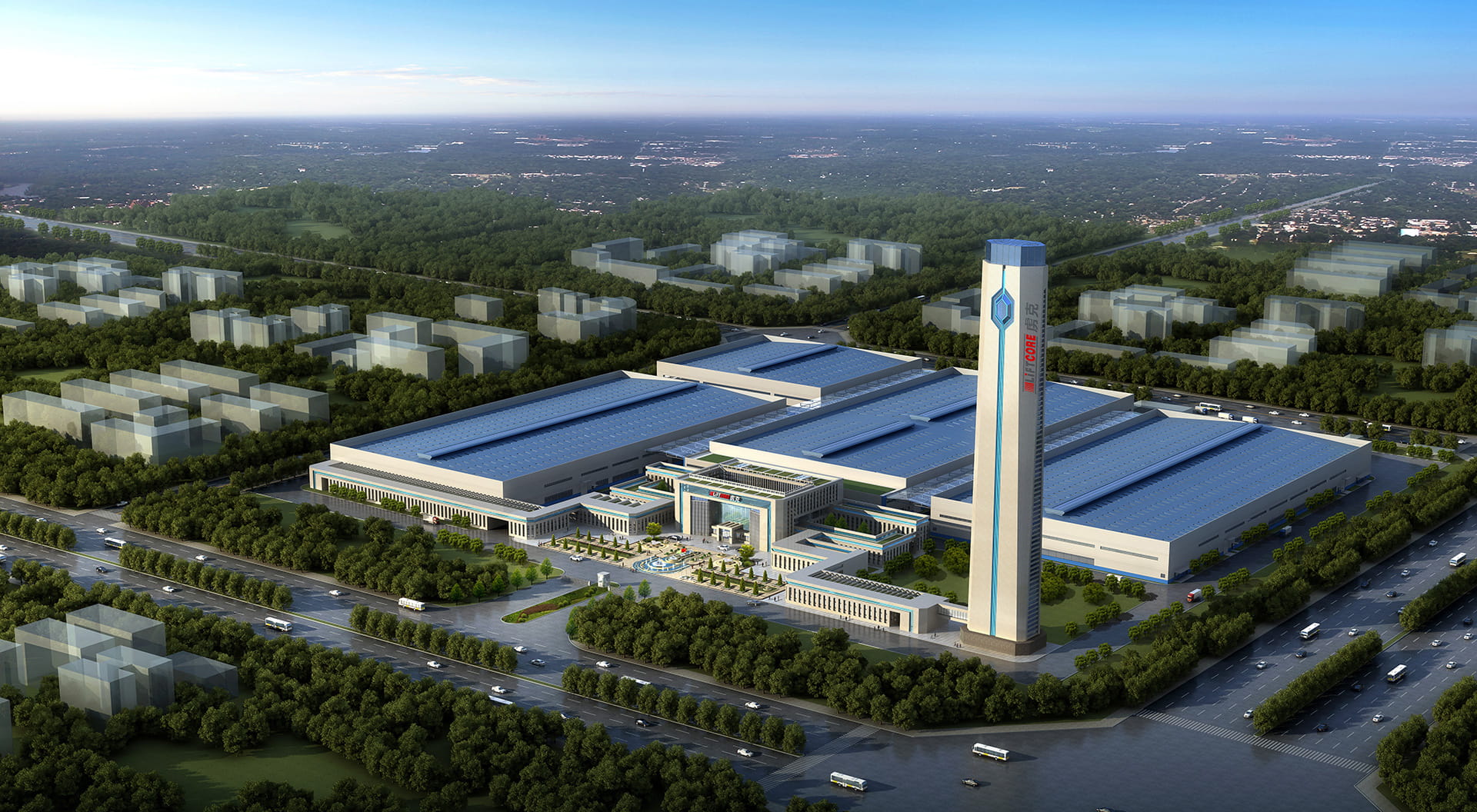
LiFTCORE operates a 140,000-square-meter manufacturing campus in Zhengzhou, Henan Province, which includes a 100-meter test tower with seven hoistways and a production capacity reaching 20,000 elevators and escalators annually in its first phase . The facility also houses a training base designed for installer and maintenance technician education, reflecting the manufacturer’s recognition that product quality alone does not ensure installation quality.
The company holds an A-level elevator manufacturing license (including installation, repair, and modification) issued by Chinese authorities, along with CE certification and German TÜV certification . These credentials are essential for distributors and contractors operating in markets where regulatory documentation is scrutinized during project approval.
LiFTCORE’s reference projects illustrate its reach across global architectural environments: Resorts World Sentosa and Marina Bay Residences in Singapore, City Metro Hub in Sydney, and Ciel Dubai Marina in Dubai. For an elevator manufacturer, such references serve as evidence that the company can meet the documentation, logistics, and technical coordination requirements of international projects—not merely supply hardware.
Serving the Full Spectrum of Elevator Clients
An elevator manufacturer that claims to serve all market segments must demonstrate genuine capability across each. LiFTCORE’s client base and service structure address the distinct needs of several professional groups.
Private High-End Residential Owners
Luxury homeowners and their architects require more than vertical transport. The elevator must integrate with interior design, operate quietly, and offer intuitive, touchless interfaces. LiFTCORE’s control platform supports features such as facial recognition and voice-activated calls, along with customizable car operating panels . For residential installations where the elevator is a visible design element rather than a hidden utility, this flexibility in interface design and finish options becomes a specification point.
Real Estate Developers and Commercial Clients
Developers evaluating an elevator manufacturer for multi-building projects prioritize standardization, lifecycle cost predictability, and service coverage. LiFTCORE’s lifecycle services—installation, preventive and predictive maintenance, modernization, and 24/7 technical support—provide a single-accountability structure from commissioning through operation. The ability to monitor elevator performance remotely across a portfolio allows property managers to shift from reactive repairs to planned interventions.
Industrial and Logistics Operations
Industrial clients have different priorities: throughput, integration with automated material flow, and minimal unplanned downtime. LiFTCORE’s intelligent goods lifts have been deployed in industrial park settings where automated guided vehicles (AGVs) and logistics scheduling systems require seamless handoffs with vertical transport. For an elevator manufacturer, this level of system integration demonstrates capabilities beyond passenger elevator supply—it indicates an understanding of industrial process requirements.
Modernization and Retrofit Specialists
Older buildings present constraints that new installations do not: limited shaft dimensions, obsolete control interfaces, and occupants who cannot tolerate extended service interruptions. LiFTCORE’s control technology has specific relevance for modernization, where modular architecture and remote commissioning capabilities allow phased upgrades. Contractors handling elevator replacement or retrofit projects can leverage these tools to reduce project risk and commissioning time—a value proposition that resonates with building owners evaluating modernization versus full replacement.
Overseas Distributors and Import Traders
For distributors sourcing elevators for resale or project supply, the manufacturer relationship determines margins, technical support quality, and long-term viability. LiFTCORE’s dual identity—German engineering heritage with manufacturing operations in China—offers access to European technical standards and documentation without the pricing structure of a purely European manufacturer. Distributors gain a product line that can compete on technology and certification while maintaining commercial competitiveness in their local markets.
Construction Contractors and EPC Firms
Elevator EPC and general contractors require manufacturers who understand critical path scheduling. A late delivery or repeated site visits for commissioning disrupts the entire project timeline. LiFTCORE’s remote diagnostic capabilities and pre-configured control parameters allow faster on-site adjustment, while installation services emphasize precision and safety compliance across building types. For firms managing multi-building projects, standardizing on a single elevator manufacturer across sites simplifies procurement, warranty administration, and spare parts logistics.
Interior Design and Decoration Companies
Fit-out specialists working on luxury residential or boutique commercial projects need an elevator manufacturer that can accommodate design intent. Customizable car interfaces, material options, and display configurations allow designers to specify finishes that align with the surrounding interior—turning the elevator from an engineering necessity into an integrated design element.
Lifecycle Support: The Measure of a Manufacturer
The difference between an elevator manufacturer and a component supplier becomes apparent after installation. LiFTCORE’s service structure addresses the full asset lifecycle through four pillars: professional installation, preventive and predictive maintenance, modernization of aging systems, and 24/7 technical support with remote diagnostics.
Predictive maintenance, enabled by the ECO PRO+ system’s sensor network and cloud connectivity, allows service providers to identify anomalies before failures occur. For a distributed portfolio of elevators across multiple buildings or even multiple countries, this capability reduces emergency callouts and improves first-time fix rates—outcomes that directly affect maintenance company profitability and building owner satisfaction.
LiFTCORE’s cloud platform connects regulators, maintenance units, technicians, property managers, passengers, and the elevator itself, creating a digital model that supports operational monitoring, unsafe behavior detection, and automatic rescue functions . For an elevator manufacturer serving global markets, this infrastructure provides the visibility needed to support installations far from the factory floor.
What to Evaluate When Comparing Elevator Manufacturers
Specifiers and procurement teams assessing elevator manufacturer candidates should look beyond product brochures. Several questions cut through marketing claims:
Does the manufacturer control its core technology? A manufacturer that develops its own control system can support remote diagnostics, parameter adjustment, and system upgrades more effectively than one that integrates third-party controls. LiFTCORE’s ECO PRO+ is developed in-house, giving the company direct control over the system’s evolution and support capabilities .
What certifications and licenses does the manufacturer hold? For international projects, CE and TÜV certification provide assurance of compliance with European safety standards. An A-level manufacturing license indicates regulatory approval for the full scope of elevator work .
How does the manufacturer support overseas clients? Distributors and EPC firms need more than a product catalog. Technical documentation, compliance support, remote diagnostic access, and responsive communication channels determine whether a manufacturer relationship functions smoothly across time zones and regulatory environments.
What is the manufacturer’s track record in projects similar to mine? Reference projects in comparable building types and geographies provide evidence of capability that specifications alone cannot. LiFTCORE’s portfolio spans residential, commercial, and industrial applications across multiple continents.
Conclusion
The role of an elevator manufacturer extends far beyond fabricating cars and controllers. In an era of smart buildings and predictive maintenance, the manufacturer becomes a technology partner whose control platform, service infrastructure, and global support capabilities shape the building’s operational performance for decades. LiFTCORE’s combination of German-origin control engineering, multi-region R&D, certified manufacturing, and lifecycle service structure positions the company as a credible partner for clients ranging from private villa owners to industrial developers and overseas distributors.
For projects where vertical mobility must perform reliably, integrate intelligently, and remain serviceable over the long term, the choice of elevator manufacturer deserves the same rigor as structural and MEP system selection. LiFTCORE invites professionals to evaluate its capabilities through technical dialogue and reference verification—not through promises, but through evidence.
FAQ
Q: What certifications does LiFTCORE hold as an elevator manufacturer?
LiFTCORE holds an A-level elevator manufacturing license (including installation, repair, and modification) issued by Chinese authorities, along with CE certification and German TÜV certification . These credentials support project approvals in markets where regulatory documentation is required.
Q: Does LiFTCORE serve overseas markets?
Yes. LiFTCORE has supplied elevators to projects in North America, Europe, Southeast Asia, and the Middle East. The company works with overseas distributors, EPC contractors, and direct clients, providing technical documentation and remote diagnostic support for installations outside China.
Q: What is the ECO PRO+ control system?
ECO PRO+ is LiFTCORE’s proprietary elevator control platform, developed by German engineering talent. It functions as a networked, intelligent elevator management system with capabilities including predictive maintenance, real-time monitoring, and intelligent energy management, rather than a conventional control system with discrete peripheral components .
Q: Can LiFTCORE support elevator modernization projects?
Yes. LiFTCORE’s control technology has specific relevance for modernization, allowing phased upgrades of legacy systems. The modular control architecture and remote commissioning capabilities reduce downtime and project risk for retrofit applications.
Q: What manufacturing capacity does LiFTCORE have?
LiFTCORE’s Zhengzhou campus spans 140,000 square meters, including a 100-meter test tower with seven hoistways. First-phase production capacity reaches 20,000 elevators and escalators annually, with expansion planned to 40,000 units upon completion of the second phase .
Ready to Evaluate LiFTCORE for Your Next Project?
Whether you are a developer specifying elevators for a mixed-use complex, a distributor seeking a manufacturer partner with competitive technology and certifications, an EPC contractor requiring reliable delivery and documentation, or a modernization specialist looking for control-system upgrade pathways, LiFTCORE’s technical team is prepared to review your requirements.
Visit LiFTCORE Global to explore the company’s solutions, or contact the team directly to discuss your project. Early engagement allows LiFTCORE to align manufacturing schedules, documentation requirements, and logistics with your critical path.
Your next elevator project deserves a manufacturer who understands the full lifecycle. Start the conversation with LiFTCORE today.