Choosing the right Passenger Elevator Manufacturer is an important decision for property developers, construction companies, architects, and building owners. A passenger elevator must do more than transport people between floors. It should provide safe operation, comfortable travel, efficient use of space, and dependable performance throughout its service life.
As residential and commercial buildings continue to develop, project requirements are becoming more diverse. Apartment buildings may prioritize everyday comfort, while office towers and hotels often need to manage changing passenger traffic. Working with an experienced Passenger Elevator Manufacturer helps project teams select equipment that matches the building layout, expected demand, and long-term operating goals.
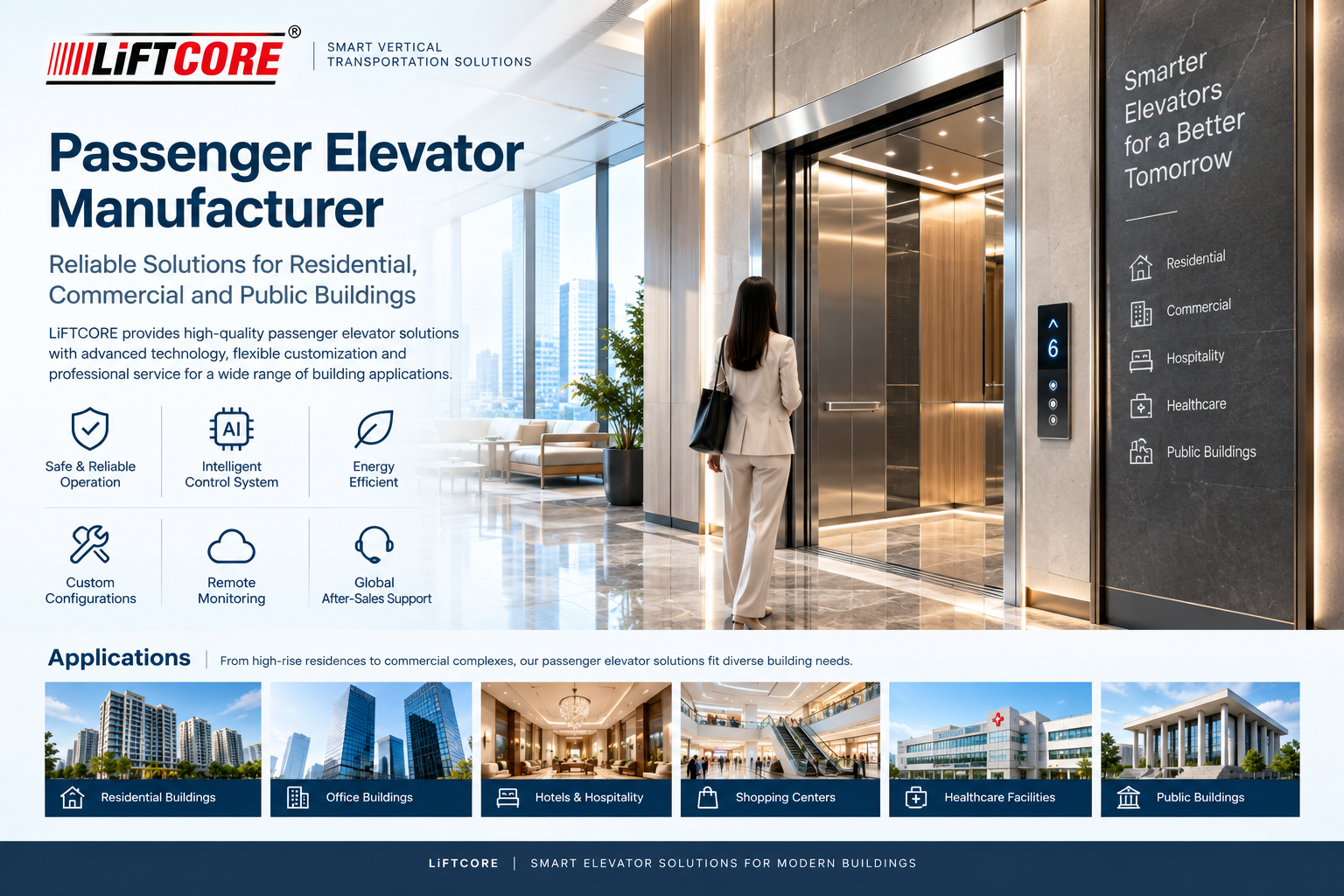
LiFTCORE provides elevator solutions for residential, commercial, hospitality, healthcare, office, and public infrastructure projects. By considering building conditions and customer requirements, the company supports the development of practical vertical transportation systems.
What to Look for in a Passenger Elevator Manufacturer
Not every elevator project has the same technical requirements. Before selecting a supplier, buyers should evaluate its product range, engineering capabilities, customization options, quality management, and after-sales support.
A qualified Passenger Elevator Manufacturer should be able to discuss the following factors:
- Product selection: Suitable elevator types for different building heights and applications.
- Load capacity and speed: Configurations based on passenger demand and building requirements.
- Shaft compatibility: Equipment planning that considers available shaft dimensions and site conditions.
- Control technology: Systems designed to support smooth operation and efficient passenger movement.
- Cabin customization: Interior finishes, lighting, doors, and other design options.
- Technical support: Assistance with project planning, installation coordination, maintenance, and troubleshooting.
Reviewing these factors early can help reduce design changes, clarify project costs, and improve coordination between the elevator supplier and construction team.
Passenger Elevator Solutions for Residential Buildings
Residential buildings require elevators that can support daily travel for residents, visitors, and building staff. Comfort, reliability, noise control, and accessibility are important considerations in apartment complexes, condominiums, and high-rise residential developments.
A professional Passenger Elevator Manufacturer can recommend configurations based on the number of floors, expected occupancy, peak travel periods, and available installation space.
Comfort and Everyday Reliability
Residents use elevators throughout the day, so stable operation and a comfortable ride are essential. Appropriate capacity, accurate floor leveling, effective door operation, and well-designed cabin interiors all contribute to the passenger experience.
Design That Fits the Building
Cabin finishes, lighting, handrails, door styles, and control panels can be selected to complement the surrounding architecture. For developers, these options help create a consistent design across common areas without overlooking functional requirements.
Passenger Elevators for Commercial Buildings
Commercial buildings often experience concentrated passenger traffic during business hours, meetings, check-in periods, or shopping peaks. Elevator planning should account for these usage patterns rather than relying on building height alone.
An experienced Passenger Elevator Manufacturer can help project teams assess traffic demand, elevator capacity, rated speed, and control configurations. These decisions influence waiting times, circulation efficiency, and the overall usability of the building.
Passenger elevator applications in commercial environments include:
- Office buildings and business centers
- Hotels and hospitality properties
- Shopping malls and retail complexes
- Mixed-use commercial developments
- Healthcare and public service buildings
- Educational and institutional facilities
Each application has different priorities. Hotels may focus on passenger comfort and service flow, while offices may need to accommodate predictable morning and evening peaks. Healthcare projects may require additional attention to accessibility and the movement of patients and staff.
Customized Passenger Elevator Configurations
Standard configurations may be suitable for many projects, but some buildings require adjustments to match architectural constraints or operational needs. A Passenger Elevator Manufacturer should review the project specifications before recommending a final solution.
Depending on the elevator model and project conditions, customization may include:
- Rated load and passenger capacity
- Rated speed and number of stops
- Cabin dimensions and interior finishes
- Door opening dimensions and configuration
- Control panels and operating functions
- Lighting, ceiling design, and handrails
- Equipment layout and installation requirements
Accurate project information is essential. Providing architectural drawings, shaft dimensions, floor plans, and local code requirements at the quotation stage helps the supplier assess feasibility and prepare a more suitable proposal.
Safety and Intelligent Control Technology
Safety should remain a central consideration when evaluating a passenger elevator. Door protection, braking systems, accurate leveling, emergency communication, and reliable control functions all contribute to safe daily operation.
Buyers should confirm which safety features are included in the proposed configuration and whether the equipment can meet the applicable regulations in the destination market. Certification requirements can vary by country and project type, so compliance should be verified for the specific elevator model.
Modern elevator systems may also incorporate intelligent controls and monitoring functions. Depending on the system, these technologies can support traffic management, equipment-status monitoring, fault notifications, and maintenance planning.
LiFTCORE focuses on elevator engineering and smart control technology for different building applications. For project owners, the value of these features depends on how well they address actual operating requirements and integrate with the building’s management systems.
Energy Efficiency and Long-Term Operating Costs
The purchase price is only one part of an elevator project’s total cost. Energy use, maintenance needs, component availability, and service requirements can affect the cost of operating the equipment over time.
When comparing a Passenger Elevator Manufacturer, buyers should consider the efficiency of the proposed drive and control systems, expected usage levels, and the maintenance plan. Machine-room-less configurations may also be worth evaluating when building space is limited and the selected model suits the project.
Energy-saving functions should be assessed against the building’s actual operating pattern. A system designed for a low-rise residential building may not be the best choice for a busy commercial property with high passenger turnover.
Installation Planning and After-Sales Support
Successful elevator delivery requires coordination between the manufacturer, developer, general contractor, installation team, and local project partners. Clear technical documentation and timely communication can help prevent delays during construction.
Before placing an order, confirm the following with your supplier:
- Production schedule and delivery arrangements
- Technical drawings and interface requirements
- Packaging and transportation responsibilities
- Installation guidance and commissioning arrangements
- Warranty terms and spare parts availability
- Maintenance recommendations and technical support channels
A dependable Passenger Elevator Manufacturer should explain the responsibilities of each party and provide clear documentation throughout the project. These arrangements are particularly important for international projects involving cross-border transportation and local installation teams.
Why Consider LiFTCORE for Passenger Elevator Projects?
LiFTCORE offers elevator products and vertical transportation solutions for a range of building environments. Its portfolio includes passenger elevators, villa and panoramic elevators, passenger and freight elevators, escalators, moving walks, and smart control systems.
Rather than selecting equipment based on a single specification, project teams can evaluate the elevator in relation to the building’s architectural layout, passenger flow, design preferences, and operating needs.
LiFTCORE also presents lifecycle services covering installation, maintenance, modernization, and technical support. For developers, contractors, distributors, and property owners, discussing these requirements early can help create a clearer plan for both project delivery and long-term operation.
How to Request a Passenger Elevator Quotation
To help a Passenger Elevator Manufacturer prepare a relevant quotation, buyers should provide as much project information as possible.
- Identify the building type and project location.
- Specify the number of floors and required elevator quantity.
- Provide shaft dimensions, pit depth, and overhead height where available.
- Describe the required load capacity, speed, and door configuration.
- Share architectural drawings and preferred cabin finishes.
- Confirm applicable local standards, delivery expectations, and support requirements.
With these details, the supplier can assess the project’s technical conditions and recommend a suitable configuration for further review.
Conclusion
Selecting the right Passenger Elevator Manufacturer involves more than comparing product prices. Building compatibility, passenger comfort, safety, customization, energy efficiency, and after-sales support should all be considered before making a decision.
LiFTCORE provides passenger elevator solutions for residential and commercial developments, hospitality properties, healthcare facilities, and public buildings. By starting with clear project requirements and reviewing the proposed specifications carefully, buyers can make more informed decisions about their vertical transportation systems.
For your next project, contact LiFTCORE to discuss your building requirements and explore suitable passenger elevator options.
Frequently Asked Questions
What does a passenger elevator manufacturer provide?
A passenger elevator manufacturer supplies elevator equipment and may provide engineering support, configuration recommendations, customization, technical documentation, and after-sales services. The exact scope depends on the supplier and project agreement.
Can passenger elevators be customized for different buildings?
Yes. Depending on the model and project conditions, customization may cover load capacity, speed, cabin dimensions, doors, interior finishes, and control functions.
How do I choose a passenger elevator supplier?
Compare product suitability, engineering capability, safety compliance, manufacturing quality, delivery arrangements, warranty conditions, spare parts, and technical support. Request a detailed specification rather than relying on price alone.
What information is needed for a passenger elevator quotation?
Useful information includes building type, location, number of floors, elevator quantity, shaft dimensions, load capacity, speed, door configuration, drawings, and applicable local standards.
Does LiFTCORE provide passenger elevator solutions for international projects?
LiFTCORE serves a range of global building applications. Contact the company with your project details to confirm the suitable product configuration, destination-market requirements, delivery arrangements, and available technical support.