Selecting a passenger elevator manufacturer is an important decision for property developers, construction contractors, architects, and elevator distributors. The right partner can help align vertical transportation systems with building requirements, passenger expectations, project schedules, and long-term maintenance needs. The wrong choice, however, may lead to design conflicts, unexpected costs, installation challenges, or difficulties maintaining equipment after handover.
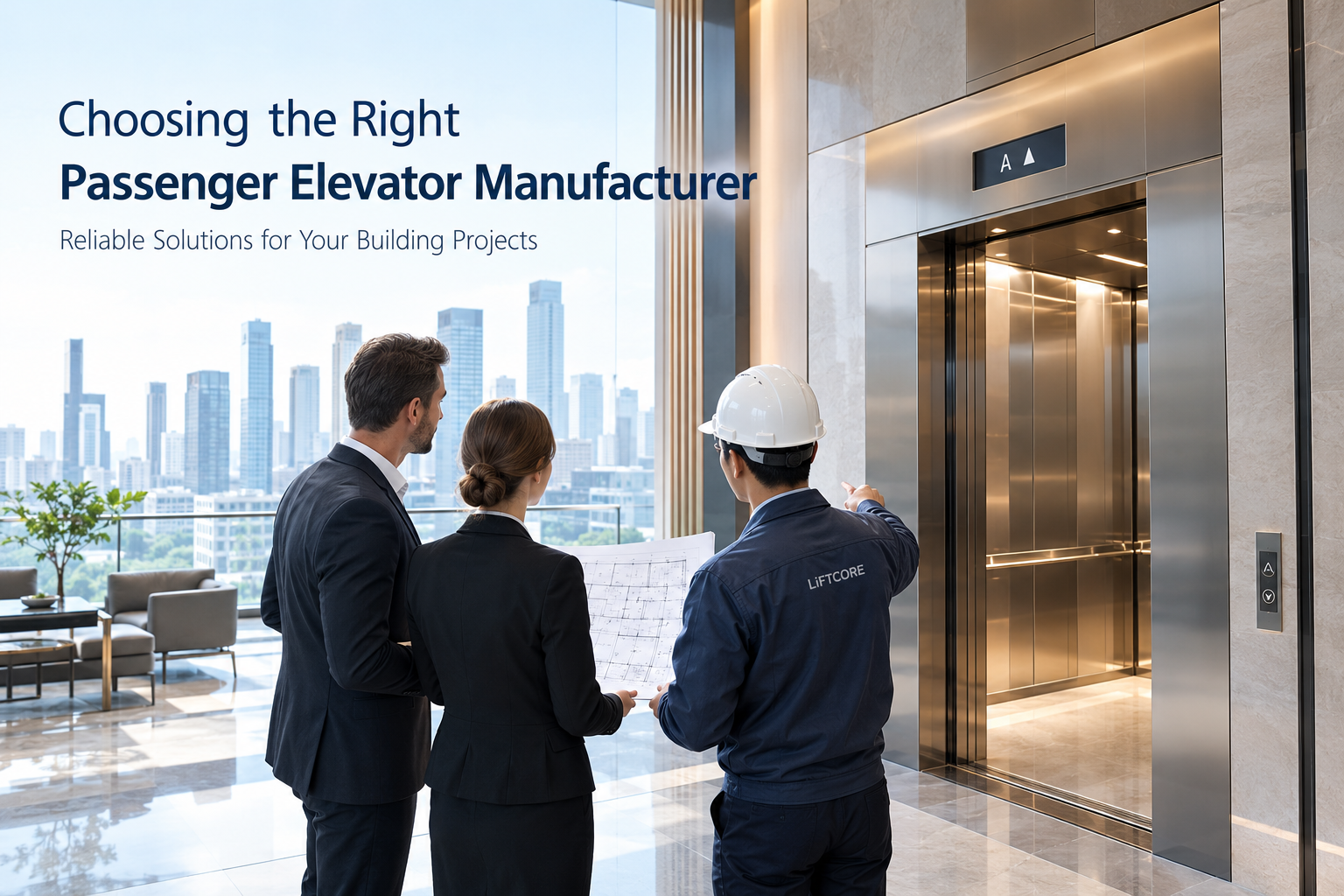
As buildings become more connected and architectural requirements become increasingly diverse, elevator procurement involves much more than comparing product prices. Buyers need to evaluate engineering capabilities, customization options, control technology, manufacturing resources, technical communication, and after-sales support.
LiFTCORE provides elevator and vertical transportation solutions for residential, commercial, hospitality, healthcare, and public infrastructure applications. For B2B customers, understanding how to assess an elevator supplier can make project planning more efficient and help establish a stronger foundation for long-term cooperation.
This guide explains the key factors to consider when selecting a passenger elevator partner and how to prepare for a more effective procurement process.
1. What Should a Passenger Elevator Manufacturer Provide?
A professional passenger elevator manufacturer should do more than supply equipment. The supplier should understand the relationship between the elevator system, the building structure, expected passenger traffic, architectural design, and operational requirements.
For developers and contractors, this means looking for a partner capable of discussing the project before the final specifications are confirmed. Early technical communication can help identify shaft limitations, access requirements, traffic challenges, and potential coordination issues before they become costly changes during construction.
Important evaluation criteria include:
- Engineering capability: The ability to assess building conditions and recommend suitable elevator configurations.
- Product range: Solutions that address different building types and passenger transportation requirements.
- Customization: Options for cabin layouts, doors, finishes, and control configurations where available.
- Manufacturing and quality processes: Clear information about production, inspection, testing, and documentation.
- Project coordination: Effective communication with architects, contractors, consultants, and local installation partners.
- After-sales support: Access to technical assistance, maintenance guidance, spare parts, and modernization services.
Not every supplier offers the same level of support across these areas. Buyers should therefore evaluate the complete project relationship instead of relying solely on a quotation or product brochure.
2. Match the Passenger Elevator Manufacturer to Your Building Type
Different buildings create different transportation demands. A suitable solution for an apartment building may not be the best choice for a hotel, office tower, healthcare facility, or public building.
Residential Projects and Apartment Buildings
Residential elevators are used repeatedly throughout the day by residents, visitors, property managers, and service personnel. Ride comfort, dependable operation, accessibility, and interior appearance are therefore important considerations.
When working with a passenger elevator manufacturer, residential developers should provide the building’s floor count, expected occupancy, shaft dimensions, and architectural requirements. These details help the supplier assess the proposed configuration and identify any design issues that require attention.
Cabin finishes, lighting, handrails, and door styles can also influence how the elevator integrates with residential interiors. For multi-building developments, consistency across elevator specifications may simplify project management and future maintenance planning.
Commercial Offices, Hotels, and Mixed-Use Buildings
Commercial buildings often experience concentrated passenger traffic during particular periods. Offices may have morning arrival and evening departure peaks, while hotels and mixed-use developments have different patterns depending on guest activity, retail operations, and building services.
A capable supplier should consider expected traffic, building layout, passenger circulation, and the intended use of each floor. Capacity, speed, control configuration, and the number and arrangement of elevators should be evaluated as part of the overall vertical transportation plan.
For hotel projects, cabin appearance and the passenger experience may be especially important. For office developments, transportation efficiency and integration with building operations can have a greater influence on the specification.
Healthcare and Public Infrastructure
Healthcare facilities and public buildings require careful planning around accessibility, passenger movement, operational continuity, and applicable local requirements. Project teams should clearly communicate the intended use of the elevator and whether special transportation needs apply.
A passenger elevator manufacturer should review these requirements before recommending a system. Where a project requires specialized hospital elevators or other dedicated equipment, buyers should confirm that the proposed product is appropriate for the intended application rather than assuming a standard passenger model will meet every need.
Explore LiFTCORE’s elevator solutions for modern buildings to understand how different building environments influence elevator selection.
3. Evaluate Customization and Engineering Support
No two building projects are exactly alike. Even when two buildings have similar floor counts, their shaft dimensions, traffic patterns, interior designs, and construction conditions may differ significantly.
A qualified passenger elevator manufacturer should be able to discuss project-specific requirements and explain which options are available for the proposed system.
Depending on the product and project, customization may involve:
- Rated load and operating speed.
- Cabin dimensions and internal layout.
- Door opening dimensions and configuration.
- Cabin materials, lighting, and decorative finishes.
- Control systems and operational functions.
- Safety features appropriate to the application.
- Interfaces with building access or management systems, where supported.
These items should be treated as subjects for technical confirmation rather than assumed standard features. The final configuration depends on the selected product, building conditions, applicable codes, and the supplier’s engineering assessment.
Why Early Technical Coordination Matters
Elevator planning should begin early enough to coordinate with architectural, structural, electrical, and construction teams. Late changes to shaft dimensions, entrance arrangements, or equipment requirements can affect other building trades and create scheduling pressure.
To improve coordination, buyers should share available architectural drawings, shaft plans, floor information, and project schedules during the initial consultation. The supplier can then identify missing information and clarify which design decisions must be finalized before production.
For contractors managing several projects, a repeatable technical review process can also improve communication between procurement teams, designers, and site personnel.
4. Consider Smart Control Technology and Energy Efficiency
Modern elevator systems are increasingly connected to intelligent controls, monitoring functions, and building management strategies. These technologies can support operational oversight and help facility teams understand equipment conditions.
When comparing a passenger elevator manufacturer, buyers should ask which control and monitoring functions are included in the proposed configuration, which are optional, and what infrastructure is required to use them.
LiFTCORE presents intelligent elevator control, AI-related technologies, and predictive maintenance among its technology development areas. The relevance of each function depends on the specific product and project configuration, so buyers should request technical documentation before including these capabilities in procurement specifications.
Assess Energy Performance in Context
Energy consumption can contribute to the operating cost of a building throughout its service life. However, actual performance depends on factors such as equipment selection, passenger demand, building usage, control settings, and maintenance condition.
Machine-room-less (MRL) configurations and regenerative drive technologies may be worth evaluating where suitable. LiFTCORE’s website promotes these technologies as part of its elevator offering.
Rather than assuming that one configuration is always more efficient, project teams should compare the available technical data, installation requirements, expected operating patterns, and lifecycle implications. This approach supports a more informed decision than comparing purchase prices alone.
5. Verify Safety Requirements, Quality Processes, and Documentation
Safety and compliance must be central to elevator procurement. Requirements vary by country, project type, building regulations, and the applicable standards for the proposed installation.
A responsible passenger elevator manufacturer should be able to clarify the relevant product documentation, inspection arrangements, and compliance requirements for the destination market. Buyers should establish these expectations before placing an order, particularly when importing equipment or working through local installation partners.
LiFTCORE’s official brand information references international certifications, including TÜV, CE, and CSA. Nevertheless, buyers should verify the specific certificates, product scope, issuing body, validity, and applicability to the intended configuration and market. A general company-level statement should not be treated as proof that every product or project automatically meets every local requirement.
Quality assurance should also be discussed throughout the supply process. Useful questions include:
- What production inspections and final tests are performed?
- Which inspection records and technical documents are provided?
- How are product specifications and approved changes controlled?
- What packaging and shipment arrangements are available?
- Who is responsible for coordinating local compliance and installation approvals?
Clear answers help procurement teams understand the supplier’s process and identify responsibilities before the project advances.
6. Compare Total Project Cost, Not Just the Initial Quotation
Price is important, but the lowest initial quotation does not necessarily represent the best commercial value. A meaningful comparison should account for the complete project scope and the expected cost of operating and maintaining the elevator.
When reviewing proposals from a passenger elevator manufacturer, confirm whether the quotation clearly identifies the equipment configuration, included components, customization, documentation, delivery terms, installation responsibilities, and exclusions.
Depending on the contract, buyers may also need to account for civil works, electrical provisions, local transportation, import duties, installation, commissioning, inspections, and ongoing maintenance. These items should be verified individually rather than assumed to be included.
Lifecycle considerations matter as well. Availability of replacement parts, technical assistance, maintenance requirements, and future modernization options can influence long-term ownership costs.
LiFTCORE provides installation, maintenance, modernization, and technical support services through its broader service offering. Buyers should discuss the exact scope, regional availability, commercial terms, and responsible service partners for their specific project.
Review the official LiFTCORE website for an overview of its elevator solutions and lifecycle services.
7. Assess Manufacturing Capability and International Project Support
For overseas projects, a supplier’s ability to communicate clearly and coordinate across different markets can be as important as the product itself. Project teams may need to manage technical drawings, product approvals, delivery schedules, shipping documents, installation arrangements, and local service requirements.
An experienced passenger elevator manufacturer should explain how project information is reviewed, how design changes are approved, and how technical questions are handled during procurement and delivery.
B2B buyers should consider the following factors:
Production and supply planning: Ask how the supplier confirms the production schedule, communicates changes, and coordinates shipment requirements.
Technical documentation: Establish which drawings, manuals, product records, and installation documents will be supplied and in which languages.
Installation coordination: Confirm whether installation is handled directly, through a local partner, or by the customer’s appointed contractor.
After-sales responsibilities: Clarify response channels, spare-parts arrangements, maintenance guidance, and the geographic coverage of support services.
Long-term cooperation: For distributors and contractors, discuss product training, technical communication, order planning, and how recurring projects will be managed.
LiFTCORE describes a global manufacturing and R&D presence and a portfolio spanning passenger elevators, freight elevators, intelligent control, and other vertical transportation solutions. For a particular order, buyers should confirm the actual manufacturing location, production capacity, lead time, and service arrangements applicable to their project.
8. Prepare an Effective RFQ for Your Passenger Elevator Manufacturer
A well-prepared request for quotation (RFQ) allows suppliers to respond with more relevant technical and commercial information. Incomplete project details can lead to assumptions, repeated clarification, and proposals that are difficult to compare.
Before contacting potential suppliers, prepare the following information wherever available:
- Project location and building type: Identify the destination country, intended building use, and applicable local requirements.
- Building layout: Provide architectural drawings, shaft dimensions, floor count, travel height, and entrance information.
- Transportation requirements: Explain expected passenger demand, desired capacity and speed, and any special accessibility needs.
- Design preferences: Specify cabin finishes, door arrangements, and architectural integration requirements.
- Project schedule: State the target dates for technical approval, equipment delivery, installation, and handover.
- Commercial scope: Clarify whether the quotation should cover equipment only or include additional services.
- Compliance and documentation: List the standards, certificates, drawings, and records required for approval.
Ask each supplier to identify assumptions, exclusions, and items that still require confirmation. A structured RFQ makes it easier to compare proposals on an equivalent basis and reduces the risk of misunderstandings during contract negotiations.
9. Why Consider LiFTCORE for Your Elevator Project?
LiFTCORE develops elevator and vertical transportation solutions for a range of building and infrastructure applications. Its official website presents passenger elevators alongside solutions for residential, commercial, hospitality, healthcare, public, and industrial environments.
For B2B customers, the value of a supplier relationship depends on how well the proposed equipment, engineering process, manufacturing arrangements, and ongoing support fit the project’s requirements.
When evaluating LiFTCORE, project teams can discuss:
- The appropriate passenger elevator solution for the building.
- Available cabin, door, and control configurations.
- Technical coordination and project documentation.
- Relevant compliance requirements for the destination market.
- Delivery arrangements and installation responsibilities.
- Maintenance, technical support, and future modernization needs.
These discussions allow developers, contractors, consultants, and distributors to assess the proposed solution against their own technical and commercial priorities. Product selection should be based on confirmed specifications and project requirements rather than broad claims alone.
For more information about the company’s background and development, visit the official LiFTCORE Brand Story.
Conclusion
Choosing the right passenger elevator manufacturer is a strategic decision that affects building design, passenger experience, project coordination, and long-term operating requirements. A reliable selection process should consider engineering capability, product suitability, customization, safety documentation, energy performance, total project cost, and after-sales support.
For developers, contractors, architects, and elevator distributors, the most effective approach is to define project requirements early and evaluate suppliers against a consistent set of technical and commercial criteria. Clear documentation and direct communication can reduce uncertainty and help keep procurement decisions aligned with the construction schedule.
LiFTCORE offers elevator solutions and lifecycle services for diverse building applications. By sharing your project drawings, technical requirements, destination market, and expected schedule, you can begin a focused discussion about the solution best suited to your project.
Planning a passenger elevator project? Contact LiFTCORE to discuss your requirements, explore suitable configurations, and request a project-specific proposal.
Visit the official LiFTCORE website to start your inquiry.
Frequently Asked Questions (FAQ)
1. What does a passenger elevator manufacturer do?
A passenger elevator manufacturer develops and supplies elevator systems designed to transport people between floors. Depending on the company and contract, services may include engineering support, customization, manufacturing, testing, documentation, installation coordination, and after-sales assistance.
2. How do I choose a passenger elevator manufacturer for an international project?
Evaluate the supplier’s product suitability, engineering capabilities, manufacturing arrangements, technical documentation, destination-market compliance, delivery planning, and after-sales support. Confirm the exact scope of the proposed solution and verify relevant certifications for the specific product and market.
3. Can passenger elevators be customized for different buildings?
Customization may be available for cabin dimensions, door configurations, interior finishes, rated load, speed, and control options. The available choices depend on the selected model, building conditions, engineering requirements, and applicable regulations. Buyers should request a project-specific technical proposal.
4. What information should I provide when requesting an elevator quotation?
Provide the project location, building type, number of floors, shaft dimensions, travel height, expected passenger demand, desired capacity and speed, design preferences, schedule, and applicable standards. Architectural drawings and a clear description of the required commercial scope can help the supplier prepare a more accurate proposal.
5. Why should I consider lifecycle costs when buying a passenger elevator?
The initial purchase price is only one part of the total cost. Energy consumption, routine maintenance, replacement parts, technical support, and future modernization can also affect long-term ownership costs. Comparing the full scope helps buyers make more informed procurement decisions.
6. Does LiFTCORE provide elevator maintenance and technical support?
LiFTCORE lists maintenance, modernization, installation, and technical support among its lifecycle services. Buyers should confirm the availability, coverage, responsibilities, and commercial terms of these services for their location and specific project.
7. How can I contact LiFTCORE for a passenger elevator project?
Visit the LiFTCORE official website and use its contact options to share your project requirements. Include available drawings, building information, destination country, preferred configuration, and target schedule to support an initial technical discussion.